




Case Study #1 – Improper Exhaust Modifications
Exhaust Problem
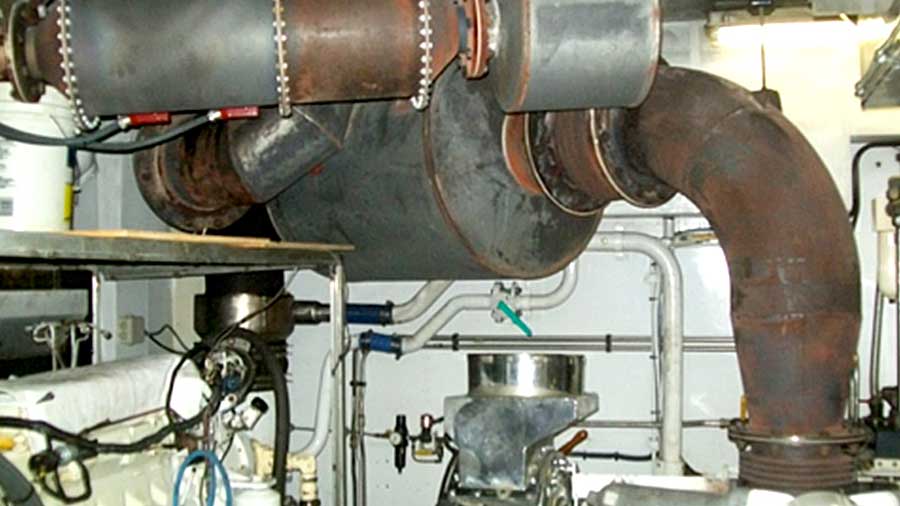
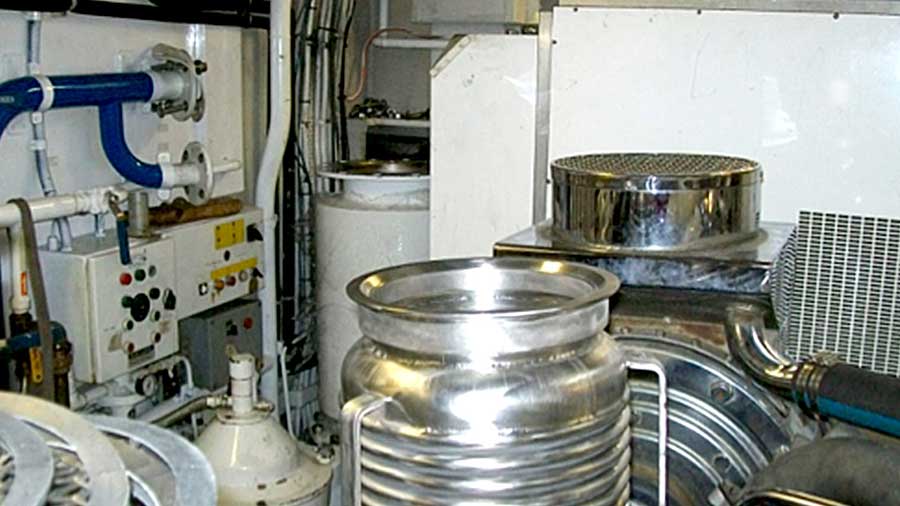
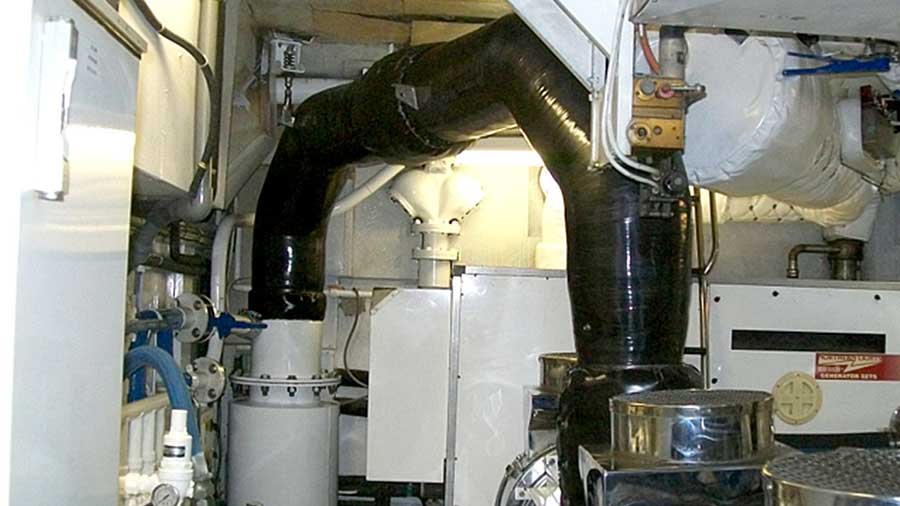
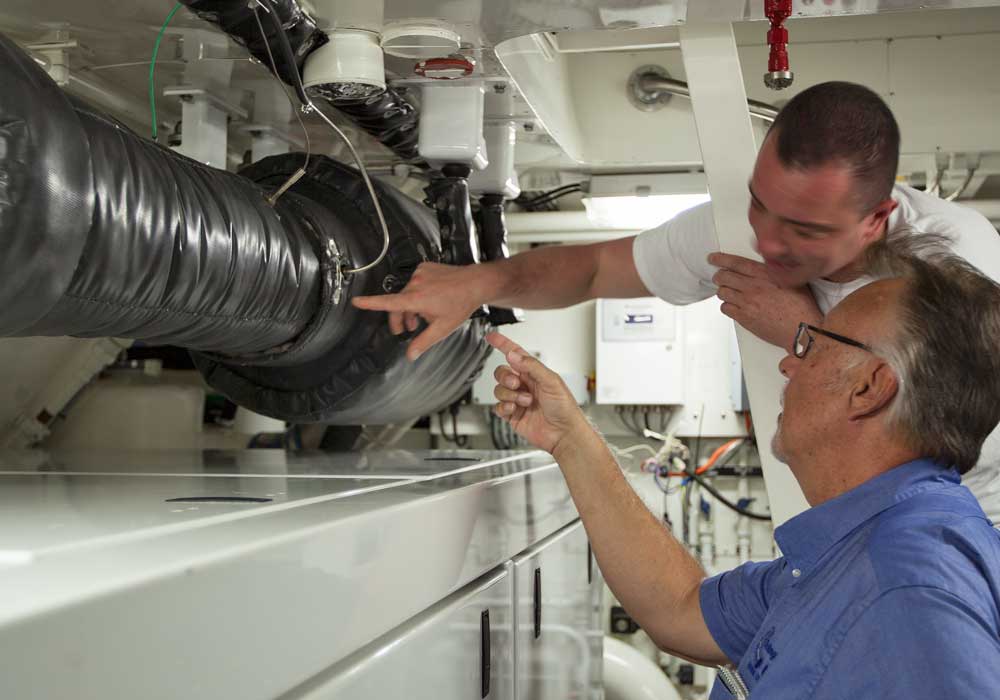
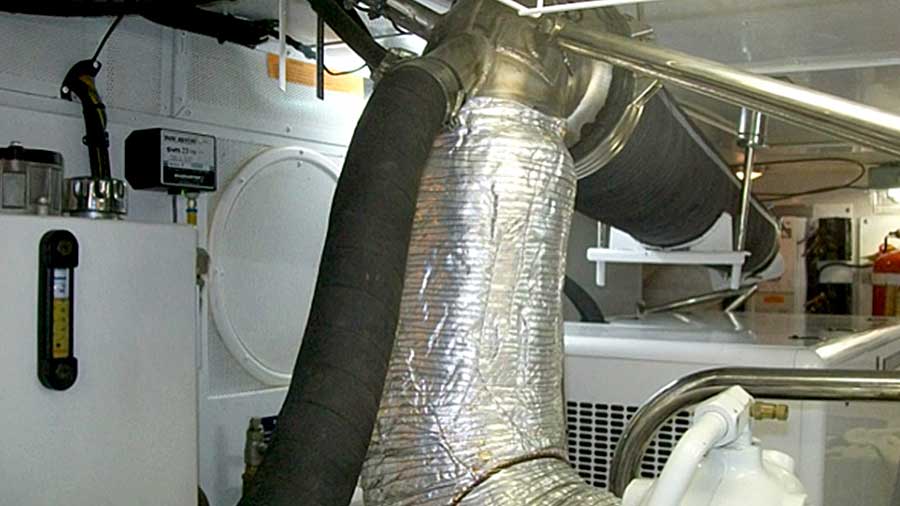
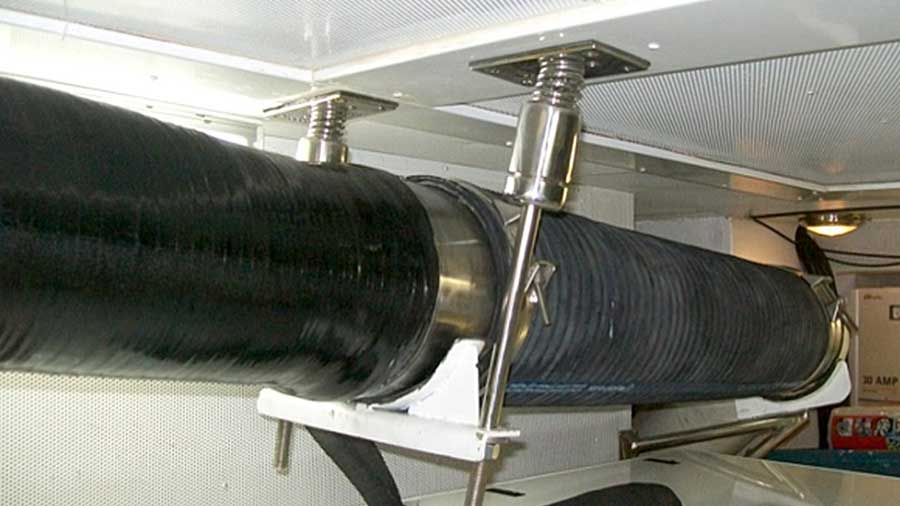
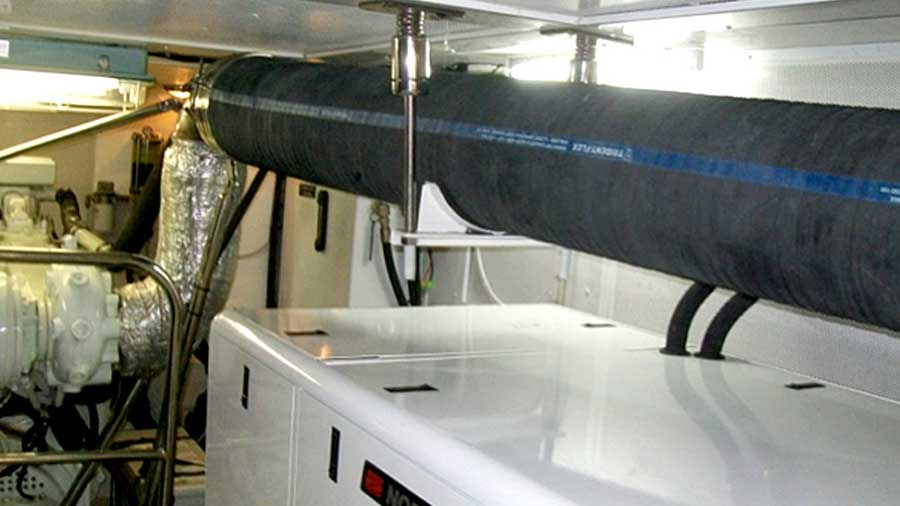
A builder used the mixer elbow that came with the propulsion engine and made an “adapter” to get the required height and geometry needed. The problem is that the mixer elbow was not designed for the installation angle. Furthermore, at the angle of installation, raw water would be held in the mixer after shutdown.
The upcoming failure would have raw water backing into the engine’s turbo.
Exhaust Solution
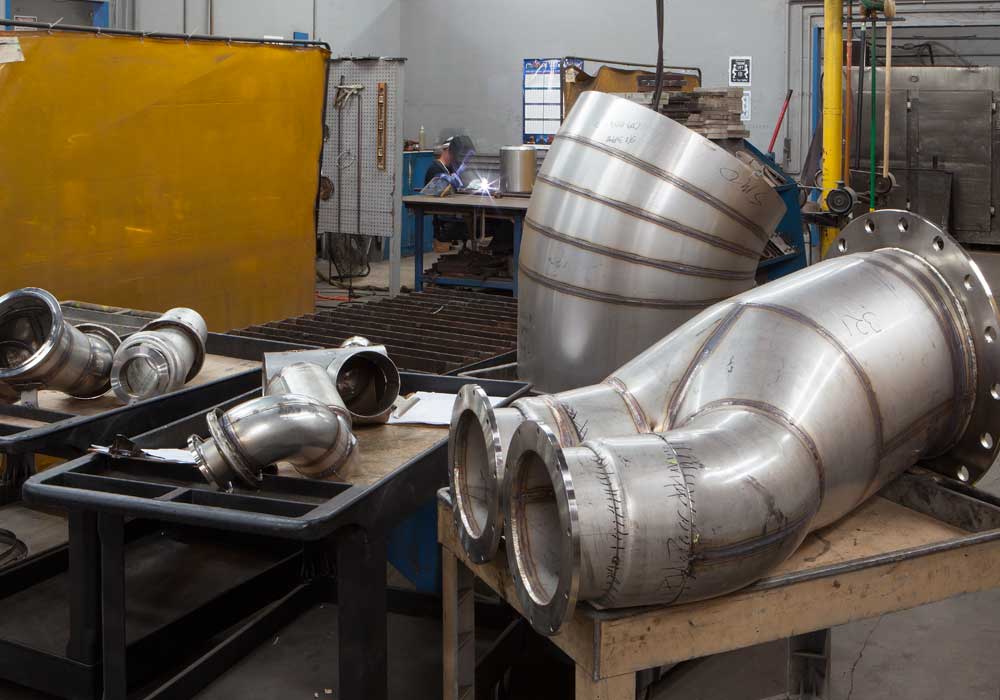
After a visit to the vessel by DeAngelo’s engineering department, and consultation with the new owner, it was decided that a new riser was to be designed and fabricated.
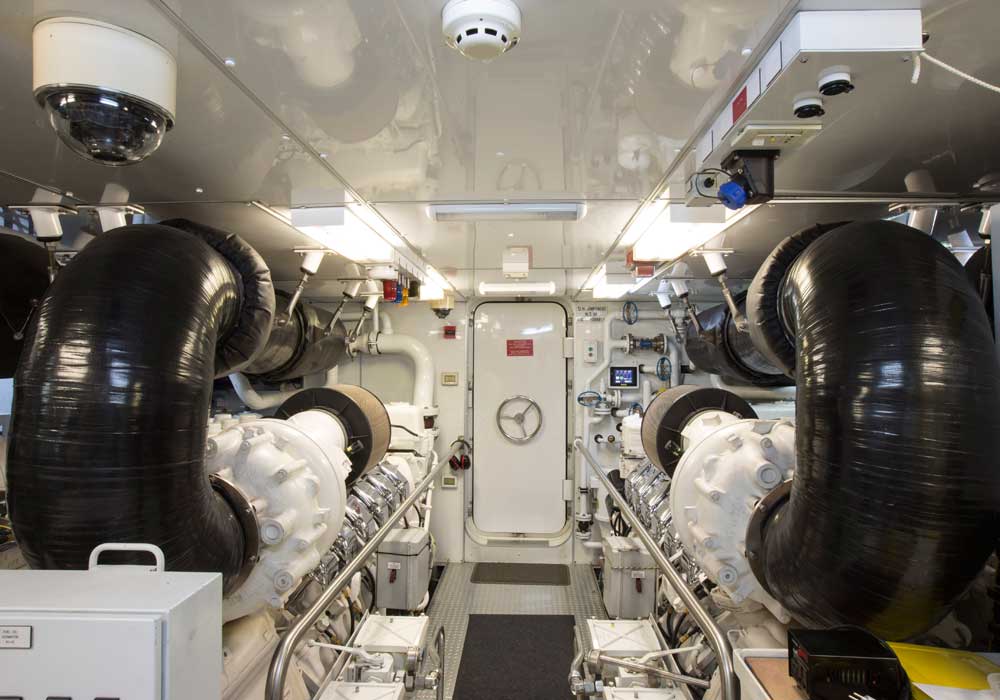
The new riser will have the mixer further aft and away from the engine so that it would drain any residual water after shutdown. The end result is a much-improved exhaust where the owner chose the Inconel mixer option.
One less worry for the owner as he ventures to long voyages.
Photos BEFORE DeAngelo Work – Click to Enlarge Images
Case Study #2 – Design Improvement to Existing Exhaust System
Exhaust Problem
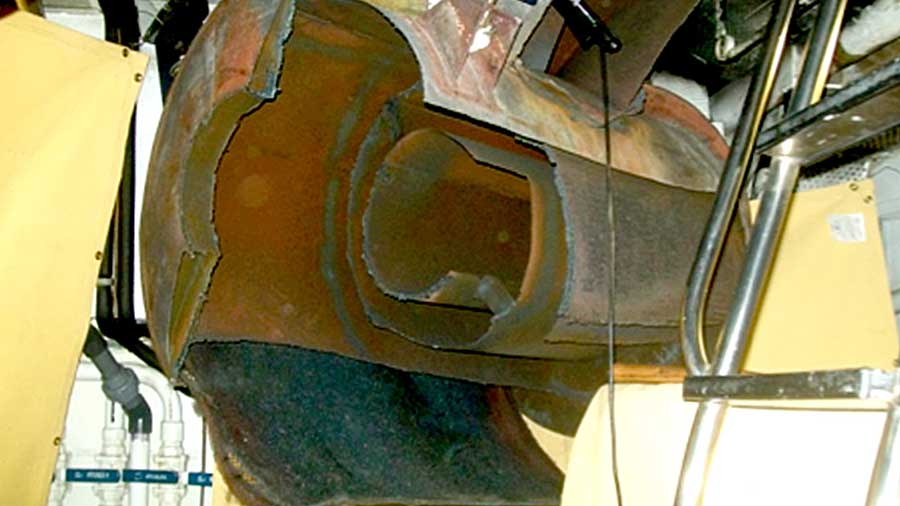
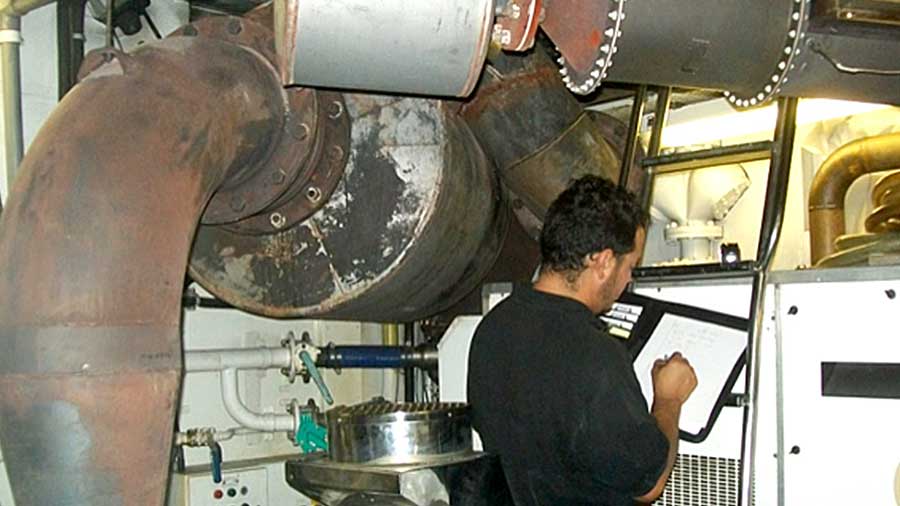
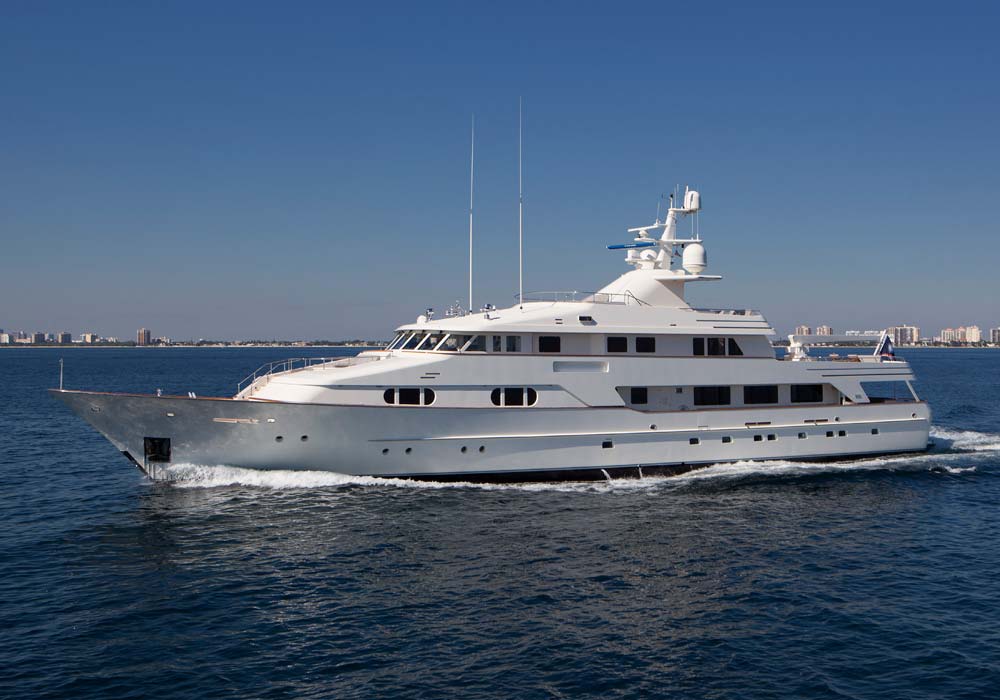
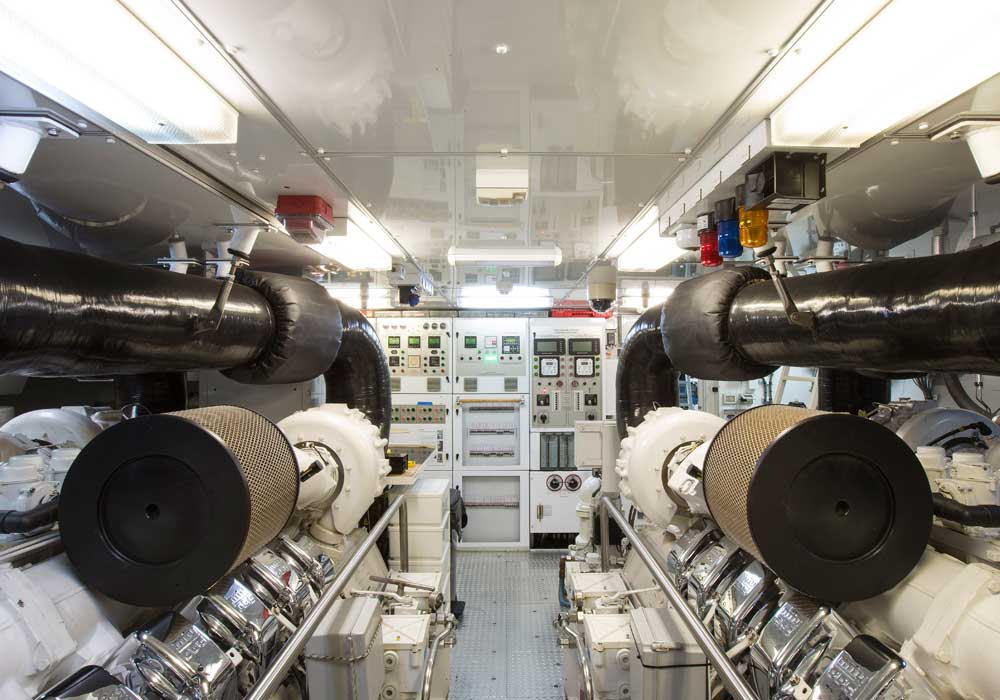
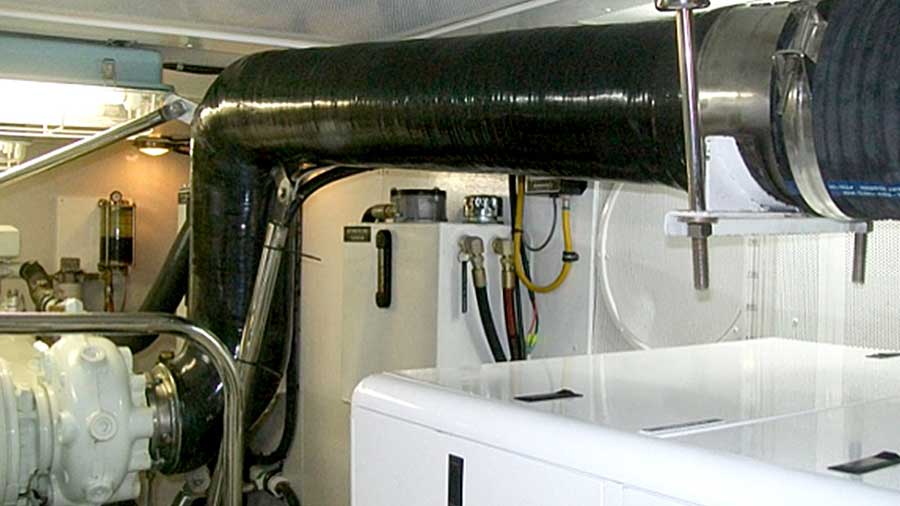
A Lloyd’s class vessel has dry cowl style silencers that have developed leaks over the years.
The metal is too deteriorated to repair.
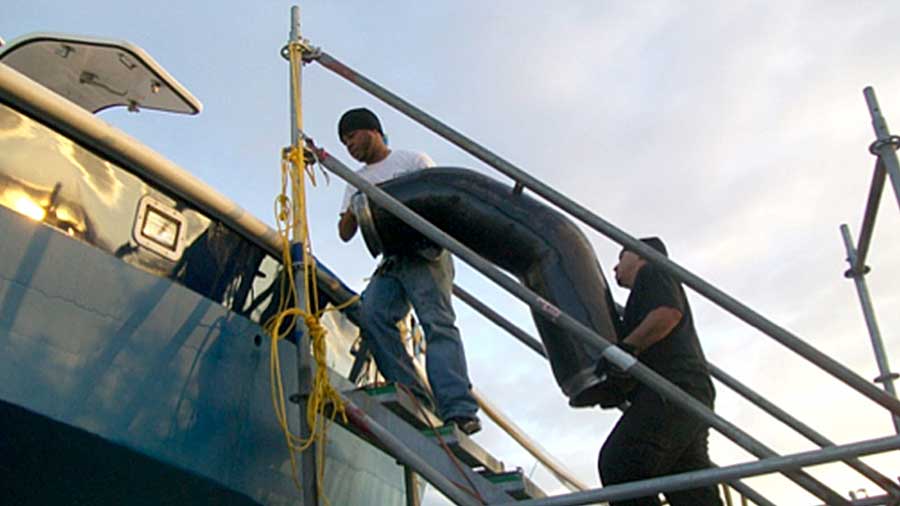
The only way of getting new ones into the engine room was to cut a hole on the side of the vessel. This is not an option.
At the same time, any work performed would require that the vessel stay to Lloyd’s class.
Exhaust Solution
DeAngelo Marine Exhaust will fabricate a new system and eliminate the dry silencer in the design. To keep the noise level low, a bypass stalk silencer will be used that would not require movement of existing machinery. The removal of the existing system required the muffler to be cut out in sections.
Once the removal was complete, the DeAngelo Engineering department was on board making preliminary measurements. Shortly after, the AutoCAD drawing of the system was given to the captain for his submission to Lloyd’s for approval. Upon completion of the fabricated components, the DeAngelo Service team proceeded with the installation.
The End Result: A new exhaust system that will maintain a lower engine room temperature, better air circulation, more open engine room, while at the same time reduce yard time and the need to cut into the hull. All of this with a Lloyd’s class approval, on time and on budget.
Photos BEFORE DeAngelo Work – Click to Enlarge Images